
Sales@mightools.com
+86-28-86736065
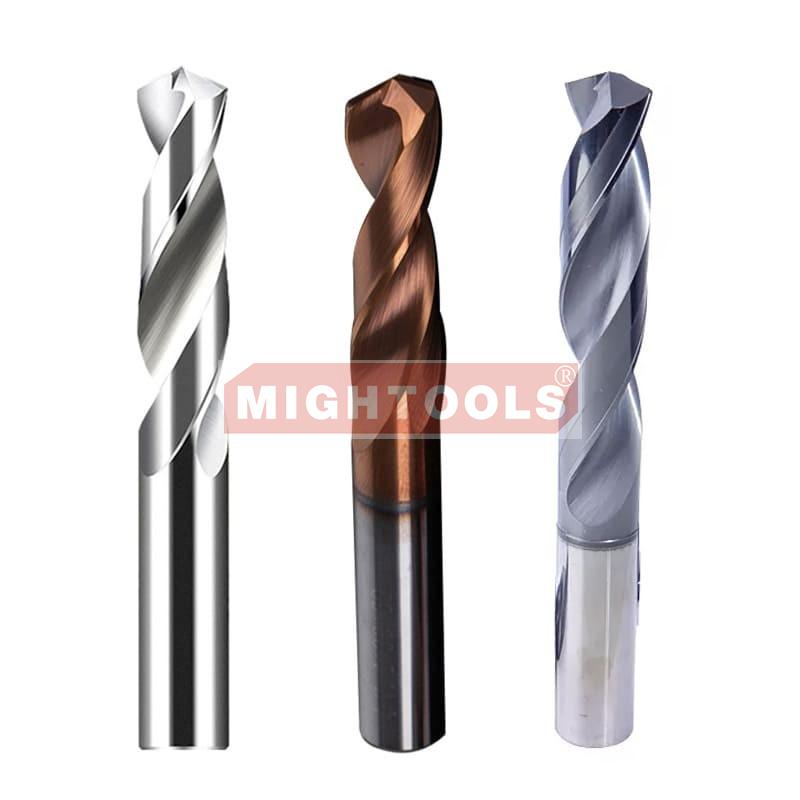
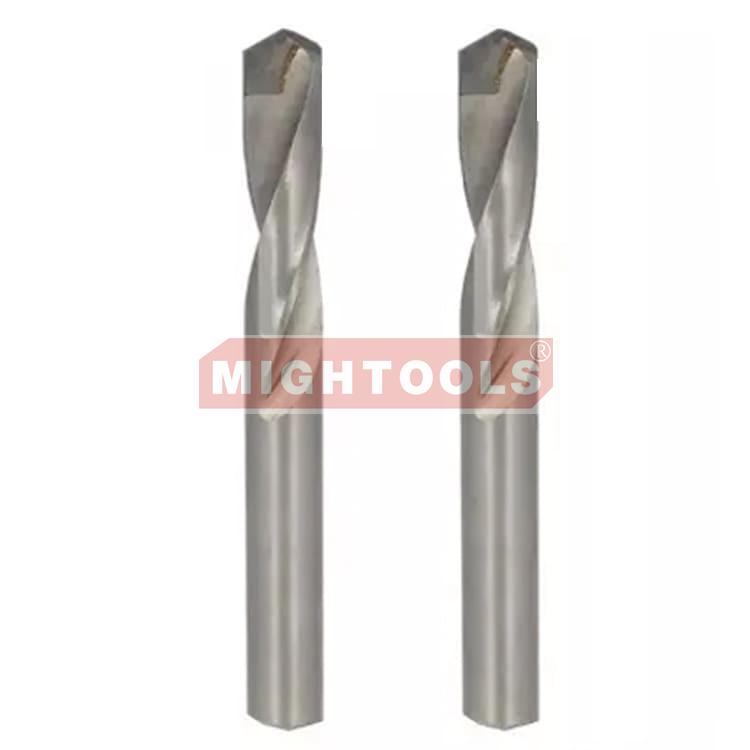
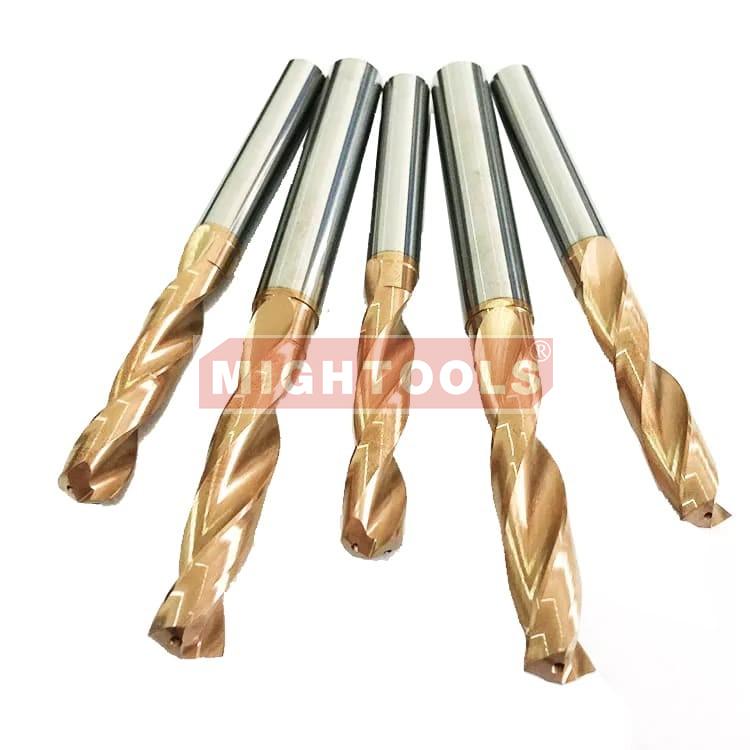
Solid Carbide Twist Drill Bit
Solid Carbide Drill With Coolant
Carbide Tipped Twist Drill Bit
Differences Between Carbide and High-Speed Steel (HSS) drill Bits
The core difference between carbide drill bits and HSS drill bits lies in their performance orientation and cost. Simply put, carbide drill bits pursue ultimate hardness and efficiency, while HSS drill bits excel in toughness and cost-effectiveness.
The differences are summarized in the table below for easy comparison:
| Aspect | Carbide Drill Bit | HSS Drill Bit |
|---|---|---|
| Core Material | Mainly composed of tungsten carbide (WC), with tungsten content up to over 90%. | A type of alloy tool steel, with tungsten content typically around 5–8%. |
| Key Performance | Extremely high hardness, highly wear-resistant; maintains Cutting performance at high temperatures, making it suitable for high-speed cutting. | Excellent toughness, impact-resistant; not prone to breaking even under uneven cutting forces. |
| Main Advantages | 1. High efficiency: Cutting speed can reach up to 2.5 times that of HSS, significantly reducing machining time. 2. Long tool life: Tool life is typically 5 times or more than that of HSS, greatly reducing tool change frequency. 3. High precision: Good tool rigidity prevents bending during drilling, resulting in higher machining accuracy and surface quality. | 1. Low cost: Tool price is much lower than carbide, making it suitable for budget-limited applications. 2. Good toughness: Less prone to chipping and breakage, with higher tolerance for impact and vibration during operation. 3. Wide application: Less demanding on working conditions, making it a universally popular choice. |
| Main Disadvantages | 1. Expensive: Unit tool cost is significantly higher than HSS. 2. Brittle material: Carbide has poor toughness and is sensitive to cutting forces and impact; prone to chipping if used improperly. 3. High resharpening cost: Requires professional equipment and technical expertise for resharpening, typically done at specialized service centers. | 1. Lower efficiency: Permissible cutting speeds are lower, resulting in longer machining times. 2. Faster wear: Short tool life especially when machining hard materials, requiring frequent replacement or resharpening. |
| Applicable Scenarios | High-volume, high-efficiency production; primarily used for machining stainless steel, cast iron, hardened steel, titanium alloys, glass, ceramics, and other difficult-to-machine or hard materials. | Low-volume, maintenance, or light-duty applications; suitable for machining soft or conventional materials such as mild steel, wood, and plastics. |
Contact: Luoxu
Phone: +86-13438285256
E-mail: Sales@mightools.com
Whatsapp:+86-13438285256
Add: 7F,No.2,Tongfu Alley,Xiyulong ST.,Chengdu 610015,China
We chat
